Did You Know? Heat Is One of the Most Serious Hazards on a Commercial Job Site

Did you know that construction crews face a disproportionate risk from extreme heat compared to almost any other industry? Construction workers make up only about 6 percent of the U.S. workforce, but they’ve accounted for more than a third of all occupational heat-related deaths recorded between 1992 and 2016. More recently, OSHA investigated over a thousand heat-related injuries, illnesses, and fatalities across U.S. workplaces between 2017 and 2022, including more than 200 fatalities.  

This is a big part of why commercial contractors restructure their schedules in July. Concrete pours, roofing, and other exposed exterior work often start at sunrise to avoid working through the hottest, most humid part of the day. Crews get built-in hydration breaks, and supervisors watch for early signs of heat stress rather than waiting for someone to feel sick. 

If you’re planning a commercial project this summer, it’s worth asking your contractor how they manage crew safety and scheduling around heat. A contractor with a real plan for it tends to also be the one who keeps your project on track. 

Did You Know? Footing Depth Requirements Don’t Change With the Seasons

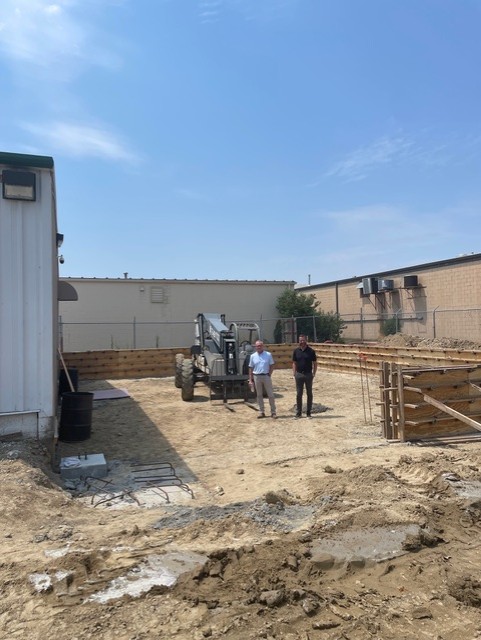
Did you know that even in the middle of a hot, humid Omaha summer, commercial foundations still have to go just as deep as they would in January? Omaha’s building code requires footings to extend at least 42 inches below the finished ground surface, per the city’s municipal code, the depth needed to get below the frost line that forms most winters. When moisture in the soil freezes and expands, the resulting frost heave can generate lifting forces as high as 50,000 pounds per square foot in extreme cases, more than enough to crack a slab or shift a foundation if footings aren’t placed deep enough. 

It might seem unintuitive to dig down that far for a summer construction project, but the code doesn’t adjust for the season the work happens to take place in. A building’s foundation has to perform through every winter it will ever see, not just the one it was poured in. 

If your business is planning an addition or new commercial building this summer, this is one of the details your contractor should already be accounting for in the site plan, regardless of how warm it is outside right now. 

Remodel or Build New? A Decision Guide for Omaha Business and Commercial Property Owners

Right now, in the middle of Nebraska’s peak storm season, a lot of commercial property owners are getting an unplanned reminder of where their building stands. Hail data going back to 1955 shows that May, June, and July account for roughly 70 percent of all hail events in Nebraska, which means this is exactly the stretch when roofs and building envelopes get tested hardest. For many owners, that’s the moment the remodel-versus-rebuild question stops being theoretical.  

Remodeling makes sense when the structure itself is sound but no longer serves the operation inside it: an outdated office layout, an inefficient warehouse flow, or a roof replacement that’s a natural opportunity to also handle the HVAC and insulation upgrades you’ve been putting off. Remodeling lets you keep a location your customers already know, and commercial remodels can often be phased to keep the business running during construction. 

New construction is the better call when limitations go beyond what a remodel can fix, structural damage, a landlocked site, or code and accessibility issues that would require rebuilding anyway. If a storm has compromised the frame rather than just the roof or finishes, new construction sometimes makes more financial sense than chasing repairs. 

Timing matters most right now because exterior work moves at the mercy of the forecast during storm season, and demand is high: 45.2 percent of all construction establishments in Nebraska are concentrated in the Omaha-Council Bluffs metro, meaning crews and materials are in heaviest demand right when storms are doing the most damage. An experienced contractor builds weather buffer days into the schedule and sequences work so rain delays on one phase don’t stall the whole project.  

If your Omaha business is weighing this decision, Prairie Construction is happy to walk the property, including an assessment if recent weather is part of the conversation, and give you an honest read on what makes sense. 

The Thomas Jefferson High School Auditorium Renovation

The curtains have officially risen at the newly renovated auditorium at Thomas Jefferson High School. As a key piece of the Council Bluffs Community School District’s Facility Master Plan, Prairie Construction has transformed this historic space into a state-of-the-art performance venue. 

Key Project Highlights 

Theatrical Excellence: We installed professional-grade lighting, rigging, curtains, and a high-fidelity sound system to give students a true “pro-stage” experience. 

Acoustics & Aesthetics: The space features specialized acoustic treatments, fresh paint, and new carpeting to ensure every performance looks and sounds its best. 

Modern Comfort: We replaced the original seating with ergonomic chairs and overhauled the HVAC system for maximum climate control and energy efficiency. 

Universal Access: Significant upgrades were made to ensure the facility is fully ADA compliant, welcoming all members of our community. 

Building for the Future 

This renovation is more than a facelift—it’s an investment in the arts. By blending modern infrastructure with cutting-edge theatrical technology, Prairie Construction is proud to help the Council Bluffs Community School District provide a world-class environment for the next generation of performers. 

See the renovation: https://youtu.be/_bTluSXjvcQ 

Building the Future of Creighton University

We love seeing the Harper Building evolve! Our latest project, The Roost, is officially complete and ready for the Creighton faculty to enjoy. Prairie Construction is honored to continue our partnership with the university, delivering spaces that inspire excellence.


A Seamless Build for Degree Wellness

When Degree Wellness partnered with Prairie Construction, their goal was simple: create a beautiful studio without the stress that often comes with construction. Through clear communication, proactive planning, and a detail-oriented approach, Prairie delivered a smooth, seamless experience from start to finish.

“Working with the team from Prairie Construction made our studio build an incredibly smooth and seamless experience,” said Liz, owner of Degree Wellness.

Throughout the project, the Prairie team remained highly responsive and transparent. Steve took the time to clearly explain each step of the process, while the superintendent ensured everything stayed on track by anticipating needs and guiding each phase with confidence.

The result is a space that reflects not only the vision of Degree Wellness, but also the high quality of Prairie’s work and trusted subcontractors.

“Prairie Construction made what could have been a stressful process feel smooth and manageable. We couldn’t be happier with the experience or the outcome.”

Why Early Spring Is the Best Time to Schedule Commercial Construction in Omaha

Timing plays a major role in the success of any commercial construction project. In Omaha, early spring offers a strategic advantage for businesses looking to renovate, expand, or improve their properties. 

Milder weather conditions allow crews to work more efficiently compared to freezing winter temperatures. Starting in early spring also helps avoid the peak summer rush, when contractor schedules are often booked out, and material lead times can increase. Securing your place on the schedule early gives you more flexibility and better overall planning. 

Beginning your project sooner rather than later also increases the likelihood of completion before fall and winter weather return. This is especially important for exterior renovations, site work, parking lot improvements, and structural additions that depend on favorable conditions. 

By planning construction in early spring, you reduce potential delays, minimize disruptions to daily operations, and position your business for growth heading into the busiest months of the year. Taking action early ensures your property improvements are completed efficiently and ready to support your long-term goals. 

Spring Is Around the Corner: How to Prepare Your Property for Upcoming Construction Projects

As winter fades and temperatures begin to rise, spring becomes one of the best times to plan property improvements. At Prairie Construction, we know that the most successful commercial construction projects start with thoughtful preparation well before work begins. 

Start by walking around your property and identifying areas that may need attention. Winter weather can reveal roofing issues, drainage concerns, pavement damage, or exterior wear that wasn’t visible before. If you’re considering a renovation or expansion, now is the time to clearly define your goals and outline what success looks like for your space. 

Next, establish a realistic budget and desired timeline. Early planning allows time to review design options, gather estimates, and secure any necessary permits or approvals. If your building is occupied, communicating early with tenants, employees, or customers helps reduce disruptions once construction begins. 

Spring schedules fill quickly, so connecting with your contractor early ensures your project stays on track. With the right preparation, you can move into construction season confidently and set your property up for long-term success. 

Building More Than Classrooms: Prairie Construction Visits Rockbrook ECC

Prairie Construction recently had the opportunity to visit Rockbrook Early Childhood Center, where Joe spoke with preschool students about the exciting classroom expansion project currently underway. 

The young learners were eager to hear how their future classrooms are being built. Joe shared a simple look at how construction projects begin, the tools and equipment used on-site, and why safety is such an important part of every build. Students even enjoyed hands-on learning moments that helped bring the construction process to life. 

With project completion just around the corner, we’re proud to help create safe, welcoming spaces where these students will learn and grow for years to come. Moments like this remind us that construction is about more than buildings — it’s about investing in our community’s future. 

Cold Weather Construction Challenges in Nebraska — And How Professionals Overcome Them

Cold weather in Nebraska presents unique challenges for construction, from frozen ground to material limitations. For homeowners and business owners planning projects during winter, understanding these challenges and how professionals address them can make a big difference. 

  1. Frozen Ground and Excavation Issues 

Digging and foundation work in frozen soil can be difficult and slow. Contractors often use specialized equipment or temporary ground-heating solutions to prepare the site safely. 

  1. Material Performance in Low Temperatures 

Concrete, asphalt, paint, and adhesives behave differently in cold weather. Professionals adjust mixing techniques, use additives, or schedule certain tasks on milder days to ensure quality. 

  1. Snow, Ice, and Safety Concerns 

Slippery conditions can slow work and increase safety risks. Winter construction teams prioritize snow removal, ice control, and protective gear to maintain safe job sites. Scheduling and temporary weatherproofing are key to maintaining productivity. 

  1. Weather-Dependent Timelines 

Winter weather is unpredictable. Contractors build flexibility into schedules to account for snowstorms, ice, and extreme temperatures. This ensures projects stay on track without compromising quality. 

While Nebraska winters pose challenges, experienced construction professionals know how to navigate them. By leveraging specialized equipment, materials, and planning techniques, projects can continue safely and efficiently, even in cold weather. Omaha property owners can trust that winter doesn’t have to mean a pause on progress.